
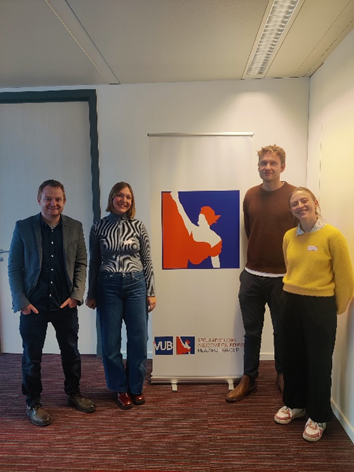
On 21 and 22 November, the research group Secular Studies Association Brussels (Vrije Universiteit Brussel) organised its second international colloquium, in collaboration with partners such as Liberas vzw, deMens.nu and the Centre Interdisciplinaire d’Études des Religions et de la Laïcité (ULB). Following the 2022 edition, which focused on the relationship between organisations and networks of non-believers and non-church members and the state, the 2025 edition centred on the possibilities of a biographical approach to the study of deconversion.
The Return of the Life Story
Biography as a method refers to the reconstruction of an individual life story in order to gain deeper insight into a person’s private and public actions and ideas, with attention to that person’s representativeness within a given historical or societal context. In recent years, the biographical method has once again attracted growing interest within the academic world. For example, this academic year the research group of Liberas is contributing to a course designed to introduce History students at the Vrije Universiteit Brussel to the possibilities and limitations of the biographical method.
Within the interdisciplinary field of secular studies in particular, growing attention is being paid to the individual life story as a key to analysing secular lifestyles and existential cultures. Focusing on individual trajectories in which people turn away from or distance themselves from religion, both in the past and today, can introduce important corrections to the secularisation theory. This theory typically relies on quantitative datasets and a macro-level focus on ‘modernisation’, leaving little room for individual experiences and ‘deconversion narratives’. This aligns with the distinction that Ryan T. Cragun (University of Tampa) made in his keynote between the individual ‘micro level’ of secularization and the societal ‘macro level’ of secularization. In doing so, he followed the typology developed by the Belgian sociologist of secularization Karel Dobbelaere.
From Vienna to Seoul
Eighteen speakers presented their research on individual life histories. The wide chronological range of the papers was particularly striking, spanning from the Napoleonic era to the 2020s.
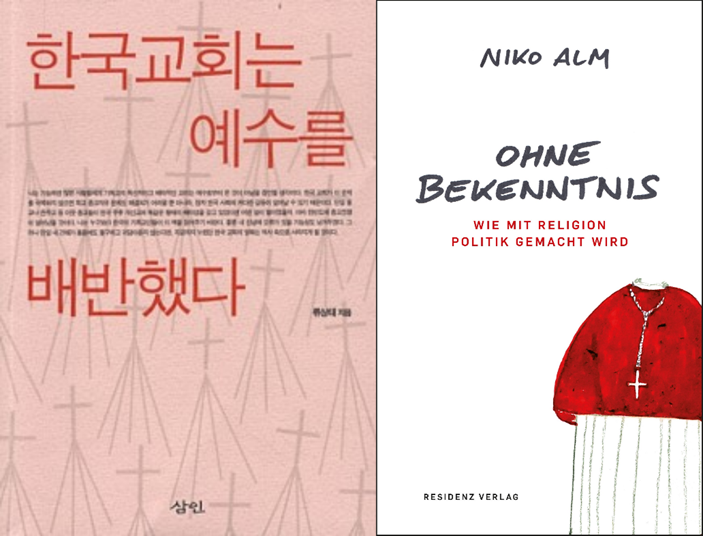
With regard to the 21st century, both differences and parallels emerged between the Austrian satirist and militant secularist Niko Alm (b. 1975), the protagonist of the presentation by Elisabeth Waldl (University of Vienna), and the South Korean defender of freedom of (non-)belief Ryu Sang Tae (b. 1957), discussed by Jungsue Rhee (École des Hautes Études en Sciences Sociales).
Alm is a prominent figure in the Austrian branch of the Church of the Flying Spaghetti Monster, conceived as a parody, and the author of Ohne Bekenntnis – Wie mit Religion Politik gemacht wird (2019). As an atheist and secular activist, his strategy consists of a wide range of tactics to challenge ecclesiastical privileges: from organizing a referendum to having a colander recognised as religious headwear in the photo on his driver’s licence.
In 2017 Sang Tae became the major representative of the Korea Institute for Religious Freedom. Earlier, he lost his position as a chaplain at a christian high school because he defended a student who sued the institution after being expelled for refusing to attend mandatory Protestant services. South Korea is the only Asian country where Protestantism, as an organized religion, has a particularly strong presence, both in terms of influence and power and in terms of the number of believers. Despite his criticism of conservative protestant churches, Sang Tae never lost his faith during this mediatised affair.
Biography and Secular Heritage in Belgium
Researchers affiliated with the Belgian heritage institutions CEDOM (the Study and Documentation Centre of Belgian Freemasonry in Belgium) and Liberas (the Centre for the History of the Freedom Ideal) presented papers on forgotten figures in the history of Belgian secularism. CEDOM director David Vergauwen spoke about the Freemason Joseph Defrenne (1797–1848), one of the founders of the Grand Orient of Belgium (1833), who, unlike Pierre-Théodore Verhaegen, is known only to a small circle of specialists. Defrenne nevertheless rests beneath a remarkable tomb monument bearing explicit Masonic symbolism in the Brussels cemetery, just like Verhaegen. Liberas researcher Christoph De Spiegeleer presented a paper on Gabrielle Rosy-Warnant (1881–1960), who – unlike Isabelle Gatti de Gamond – never entered the canon of secularist feminism in Belgium. One important reason for this is that Rosy-Warnant was active as a liberal feminist during the period between the first and second feminist waves (c. 1920–1960).
The biographical approach also shed light on actors who do not fit easily into the classical historiographical narrative of (organised) secularism in Belgium and who are therefore largely absent from the literature. A small group of female members of the Socialist Freethinkers’ Association of Ghent, whose philosophical testaments from the late 19th and early 20th centuries have been preserved, featured prominently in a paper by Nyala Nauwelaers (SSAB). Niels De Nutte (SSAB-CAVA-VUB) explored the case of the Catholic physician Charles Minet (1936–1998) and his role in founding the Association pour le Droit de Mourir dans la Dignité (1981). These two cases nuance or correct common narratives that assume a strict duality, such as the ‘feminisation thesis’, the binary division that closely links religiosity and femininity in the nineteenth and twentieth centuries, and the narrative that reduces the history of the euthanasia debate to a secular–humanist victory over Catholic ideas and practices.
Gender and Secularisation: Biography as Counter-Voice
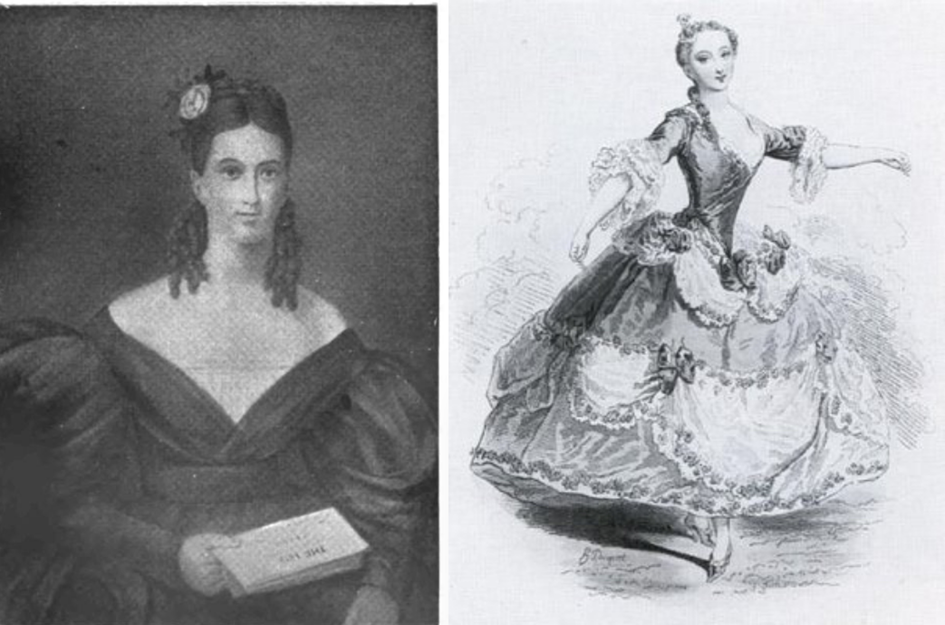
Several papers on women who challenged contemporary norms concerning the relationship between gender and religion point to a clear rise in research at the intersection of gender studies and secular studies: from the French Louise-Julie Careau (1756–1805), a correspondent and friend of Benjamin Constant, to the English Elizabeth Sharples (1803–1852), who edited the secularist journal The Isis in the 1830s.
Thanks to presentations by Jeffrey Tyssens (VUB) and Andrew Prescott (University of Glasgow), these women emerged from the shadows of, respectively, Richard Carlile – with whom Elizabeth Sharples had four children despite his never divorcing his first wife – and the actor François-Joseph Talma, from whom Louise-Julie Careau separated in 1801.
The memory of both Louise-Julie’s and Elizabeth’s own intellectual and social achievements was long overshadowed by their much-discussed relationships with Talma and Carlile. Although Louise-Julie wished for a secular burial, she nevertheless received a church burial through the intervention of a female friend. Had her wishes been carried out, it would have been the funeral of Louise-Julie Careau (in 1805) — and not that of her former husband Talma, more than twenty years later — that would have caused a great stir in Paris.
Eliza, for her part, has been forgotten—eclipsed by Richard Carlile—as a connecting figure between generations. She took in the young Charles Bradlaugh (1833–1891) when, as a teenager, he was thrown out of his parents’ home. In his presentation ‘Biography as Weapon of Choice’, David Nash (Oxford University) highlighted the use of the biographical genre in the later struggle over the remembrance of Charles Bradlaugh as the leader of the English freethought movement.
World War II as a Turning Point
The impact of the Second World War was addressed in very different contexts, including papers on the religious humanism of the Dutch concentration camp survivor Matthew Les Spetter (1921–2012), presented by Willeke Los (University of Humanistic Studies), and the autobiographical writings of the demobilised Japanese soldier Kiyoshi Watanabe (1925–1981), discussed by Akira Nishimura (University of Tokyo).
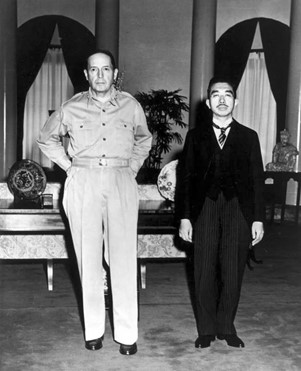
Les Spetter paid a heavy price for his participation in the resistance and ended up in the labor camp Auschwitz-Monowitz After the war, he emigrated to the United States, where he became a leading figure in the American Ethical Culture Movement, building on his liberal-Jewish background. His post-war religious humanism looked for a middle ground between the secular and the religious. During World War II, Watanabe had been deeply immersed in State Shinto, in which the emperor was worshipped as a divine figure. The iconic photograph of General Douglas MacArthur, who stripped Shinto of its status as state religion in December 1945, and Emperor Hirohito triggered in Watanabe a profound sense of betrayal and anger. After Japan’s defeat, he became a vocal critic of the earlier emperor-centred politico-religious order.
Biographical Interviews
The keynote lectures and several other contributions from cultural anthropology focused on ethnographic research into the everyday experience of religion or its rejection, based on biographical interviews. Lena Dreier (University of Münster) emphasised that social and generational shifts in religion and secularity, which transcend individual life stories, can be empirically traced through biographical interviews.
Johannes Quack (University of Zurich), for example, presented his research on an Indian man (b. 1956) who had mentally and physically distanced himself from the religious traditions of the Dalit environment in which he had grown up. Murata Herding and Anja Frank (Deutsches Jugendinstitut) focused on the life story of a woman who left Iraq for Germany in 2005, in her twenties, and who today identifies as an atheist. The difficulties faced by ex-Muslim women in publicly testifying about their trajectories – for instance out of fear that their narratives may be instrumentalised in Islamophobic rhetoric – became clear in the keynote by Nella Van den Brandt (KU Leuven). She presented her interview-based research on 23 women from the Netherlands and the United Kingdom who distanced themselves from their religion and confessional background.
The Narrative as Practice
The act of telling and sharing a personal trajectory towards unbelief, as something worth narrating, is in itself a meaningful practice, particularly in socio-religious contexts where this is far from self-evident. This was powerfully demonstrated in the keynote by Sabrina Testa (University of Santiago de Compostela) on the importance of ‘deconversion narratives’ within the atheist movement in Brazil, a country with the largest Catholic population in the world and a rapidly growing Evangelical movement.
The testimony of the Belgian-Moroccan theatre maker, Islam critic and advocate of laïcité Sam Touzani (b. 1986) also played a prominent role in Ryan T. Cragun’s presentation. In 2017, Touzani stated that he does not feel comfortable with labels such as ‘atheist’, ‘ex-Muslim’ or ‘non-believer’, because they mainly say what he is not, whereas he emphasises that there are many things he does believe in, such as humanity and the laws of nature.
Lived Experience of (Non-)Belief
In his keynote, Johannes Quack further argued for combining biographical interviews with ethnographic observation in order to gain a fine-grained understanding of the place of belief and unbelief – and the thin boundaries between them – in the everyday lives of participants. His plea to observe people in their daily lives and ‘lived experiences’, rather than focusing solely on explicit identities and positions, echoes the phenomenological approach within the comparative study of religion as developed and practiced by the Dutch scholar Gerardus van der Leeuw (1890–1950). The life and work of Van der Leeuw formed the subject of a presentation by David Veltman (University Library of Groningen).
All abstracts can be consulted here.
A publication based on the conference papers is currently in preparation.
For the book that emerged from the previous SSAB-colloquium, included in the international book series of Liberas and co-funded by CAVA-VUB, click here.


